
Alle artikelen van Ruben Boot
-
 International
Au-delà de la lentille
Les techniques de microscopie à super-résolution repoussent les limites fondamentales imposées par les lentilles optiques. À la TU Delft, Carlas Smith étudie où se situe réellement cette limite inférieure, avec pour objectif de la déplacer encore.
-
 Verdieping
Voorbij de lens
Superresolutie-microscopie technieken gaan voorbij aan de fundamentele grenzen van de lens. Carlas Smith onderzoekt aan de TU Delft waar de daadwerkelijke ondergrens ligt – om deze vervolgens te verleggen.
-
 International
Finding the gap in electrochemical processes
Scientists at Utrecht University have developed an optical method for visualising electrochemical processes at the nanoscale. The technique uses nanogaps and scattered light to track reactions in attolitre volumes without labelling, as the researchers demonstrate in PNAS.
-
 Nieuws
Elektrochemische processen in de gaten houden
Wetenschappers van de Universiteit Utrecht hebben een optische methode ontwikkeld om elektrochemische processen op nanoschaal in beeld te brengen. De techniek maakt gebruik van nanogaten en verstrooid licht om de reacties labelvrij in attoliter volumes bij te houden, zo laten de onderzoekers zien in PNAS.
-
 International
Protein prevents collisions on DNA ‘railway’
For DNA replication and transcription, different proteins move along DNA strands, each with its own task and speed. Researchers at Leiden University Medical Centre (LUMC) have now shown in the journal Nature that the protein CFAP20 acts as a traffic controller, preventing collisions.
-
 Nieuws
RS-virus gebruikt pre-assemblage voor eigen replicatie
RNA-virussen creëren hun eigen ‘virale fabrieken’ in de vorm van condensaten in gastheercellen. Nu laten onderzoekers van het Hubrecht Instituut in Nature zien dat de nucleatie volgt uit pre-assemblage van ‘zaadjes’ van virale eiwitten in de virusdeeltjes.
-
 Verdieping
Eiwit voor eiwit meten
Het blijft lastig om de precieze structuur van een individueel eiwit, inclusief kleine zijketens en modificaties te achterhalen. Single-molecule protein analysis kan dat veranderen en daarvoor zijn verschillende technieken in opkomst. ’Het voelt nog een beetje als het Wilde Westen.’
-
 International
Immune cells in the driving seat: new molecular braking mechanism discovered
Researchers at UMC Utrecht and AMOLF have discovered that two proteins influence each other on the same immune cell to adjust inhibitory signals. They present this unexpected mechanism by which immune cells adapt their behaviour in Science Signaling.
-
 Nieuws
Eiwit voorkomt botsingen op DNA-‘spoorweg’
Voor DNA-replicatie en transcriptie bewegen verschillende eiwitten langs de strengen van DNA, elk met een eigen taak en snelheid. Nu laten onderzoekers van het Leids Universitair Medisch Centrum (LUMC) in Nature zien dat het eiwit CFAP20 dienst doet als verkeerscontroleur die botsingen voorkomt.
-
 Nieuws
Immuuncellen bepalen zelf wanneer ze op de rem trappen
Onderzoekers van het UMC Utrecht en AMOLF hebben ontdekt dat twee eiwitten elkaar op eenzelfde immuuncel beïnvloeden om remmende signalen bij te sturen. Ze presenteren deze onverwachte manier waarop immuuncellen hun gedrag aanpassen in Science Signaling.
-
 International
Improvements required for CO2 electrolysis with innovative membranes
Special membranes could enable CO2 electrolysis without the need for expensive platinum group metals. However, the membranes are not yet efficient enough for long-term operation.
-
 Nieuws
CO2-elektrolyse met innovatief membraan vereist innovaties
Speciale membranen beloven CO2-elektrolyse mogelijk te maken zonder dat je dure platinagroepmetalen nodig hebt. Helaas zijn ze nog niet efficiënt genoeg voor langdurige werking, zo laten onderzoekers van de TU Delft zien in Nature Chemical Engineering.
-
 Nieuws
Cellulaire RNA-‘vacht’ trekt immuunreceptoren aan
Recente studies suggereren dat RNA-moleculen niet alleen ín maar ook óp de cel actief zijn. In Molecular Cell laten verschillende Nederlandse onderzoeksgroepen zien dat deze RNA-ketens mogelijk een rol spelen bij de herkenning van cellen door het immuunsysteem.
-
 Nieuws
Microbiële productie capronzuur ook downstream duurzaam
Biotechnologen van de TU Delft hebben een adsorptie/desorptie proces geïntegreerd met microbiële elektrosynthese voor de selectieve winning van capronzuur. In Chemical Engineering Journal laten ze zien hoe dit de inzet van hernieuwbare elektriciteit voor koolstofneutrale productie mogelijk maakt.
-
 Verdieping
Continue vinger aan de pols
Door acute ontstekingsziekten kan het afweersysteem zo heftig ontregeld raken, dat er in korte tijd een levensbedreigende situatie kan ontstaan. ‘Met een sensor die aangeeft wanneer we welke medicijnen moeten toedienen, kunnen we levens redden.’
-
 International
The scientist’s eyes
Studying nanostructures at near-atomic resolution is the bread and butter of the ICMS Center for Multiscale Electron Microscopy. Here, Heiner Friedrich and his team are continuously improving these already advanced techniques to provide an even more accurate view with minimal noise and high throughput.
-
 International
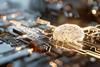
Injecting biology into computing
When it comes the bio-inspired materials for computing, the possibilities are endless. ICMS members Tom de Greef and Yoeri van de Burgt are on the forefront of developing new materials for data storage and processing.
-
 International
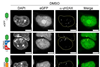
Sensor visualises DNA damage without interference
Biochemists at Utrecht University have developed a fluorescent sensor that makes DNA damage and repair visible in living cells and animals for the first time. In an article published in Nature Communications, the researchers demonstrate how the sensor binds to damaged DNA without interfering with the repair process.
-
 Nieuws
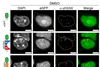
Sensor brengt DNA-schade ongehinderd in beeld
Biochemici van de Universiteit Utrecht hebben een fluorescente sensor ontwikkeld die DNA-schade en -herstel voor het eerst in real-time zichtbaar maakt in levende cellen en dieren. In Nature Communications laten ze zien hoe de sensor aan beschadigd DNA bindt zonder het reparatieproces te hinderen.
-
 International
A thousand times better with microfluidic protein identification platform
Structural biologists from Vrije Universiteit Brussel have presented a new microfluidic platform called MISO to Nature Methods. This reduces the necessary protein purification by up to a factor of one thousand.
- Vorige Pagina
- Pagina1
- Pagina2
- Pagina3
- volgende Pagina