
Features
-
 International
More protein, less emission
Using a combination of traditional fermentation techniques and carbon capture and utilization (CCU), the Antwerp-based startup Calidris Bio aims to demonstrate that new, sustainable protein sources are a viable alternative for the food industry. ‘Our role is to show that this can truly be done on a large scale.’
-
 International
Growing meat
In March, NWO and the National Growth Fund’s Cellular Agriculture program awarded 4.1 million euros to three projects, two of which focus on cultured meat. We asked Joshua Flack and David Kilian, the principal investigators of these projects, what they plan to do to bring this animal-friendly meat to our plates.
-
 International
Alta Group scales up the production of cyclic carbonates from CO2
The increasingly prominent role of batteries is driving growing demand for battery materials, including battery fluids based on cyclic carbonates. Alta Group is working on scaling up a process to produce cyclic carbonates and derivatives from captured CO2.
-
 International
You don’t owe your career to anyone
Many PhD students still experience choosing a career outside academia as a step down — and the language around it doesn’t help. Isabelle Kohler challenges the narrative behind terms like ’leaving academia’, and invites PhD students to ask themselves a harder question: whose voice are they actually listening to when ...
-
 International
Lithium from geothermal energy: a lost cause or worth the effort?
Europe wants to start mining more critical raw materials itself. The best-known of these is lithium. In Germany, it is extracted from deep underground along with hot water. ‘Logically, we do this in the areas with the highest lithium concentrations.’
-
 International
Ice cream
Every now and then, it’s good to be reminded of the magic of chemistry, says our Meme & Molecule-columnist Sjoerd Rijpkema.
-
 International
Know yourself by building your personal profile
Most early-career scientists can describe their research in detail, but stumble when asked who they are beyond their research. Isabelle Kohler makes the case for building a personal profile – and breaks down the three aspects that shape it: your life mission, your drives, and your competencies.
-
 International
A colourful reference book
Chemistry Coloring Book – Nobel Prizes in Chemistry 1901 – 2025 is a reference book covering all the Nobel Prizes in Chemistry, but with a creative twist. Grab your crayons and start colouring.
-
 International
A wealth of chemical possibilities for new batteries
The ultimate battery is sustainable, affordable, recyclable, and contains as few critical materials as possible. And, ideally, it should be manufactured in Europe. Researchers have their work cut out. ‘In principle, there are countless elements in the periodic table that can be used to make a battery.’
-
 International
‘I want to use technology to create sensations that we as humans need’
Danqing Liu employs her broad expertise to develop materials that allow a more varied sensory experience. ’Using our sense of touch is becoming more and more important in our digital world.’
-
 International
You can’t stop the rain – but you can control your response
Worry is a constant companion in early academic careers – about rejections, supervisors, career development, and much more. Isabelle Kohler offers help by introducing a simple but powerful distinction: the difference between what you can control and what you can’t.
-
 International
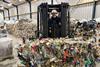
UnWastor takes on mountain of waste
Landfill or incineration. That’s what often happens to discarded plastics these days. But the startup UPPACT in Delfzijl sees greater value in recycling. To do this, they use an ingenious machine from Australia. They’re already turning the mixture into useful boards and sheets. As far as they’re concerned, these UnWastors ...
-
 International
International at heart
From Poland to Austria to the UK to the Netherlands. PhD student Jadwiga Poniatowska has moved country multiple times since the age of seventeen, and has thoroughly enjoyed the international environments in which she has studied. ‘You can gain a lot from happily working together.’
-
 International
Podium: Joice Kaschuk
Our members form the beating heart of our societies. Here, we regularly highlight one of them. This time, it’s KNCV-member Joice Kaschuk.
-
 International
Your weekend is not a luxury – protect it
Working through the weekend seems to be treated as a badge of honour in academia. Isabelle Kohler argues that protecting your weekends is not a sign of weakness or lack of ambition – it is one of the most important decisions you can make for your long-term career and well-being.
-
 International
You’re not supposed to know everything
Every early-career researcher knows the dread of standing on the podium: what if someone asks a question they can’t answer? Isabelle Kohler argues that this discomfort is the very essence of research – and that learning to cope with uncertainty might be the most important skill a PhD student can develop.
-
 International
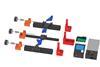
From hobby project to high-quality tool
With 3D printers, you can create advanced, custom-made equipment at an affordable price. This is not only achieved by printing parts and components entirely to your own specifications, but also by converting the printer itself into a lab robot. ‘In the past, researchers used to build the equipment for their experiments themselves.’
-
 International
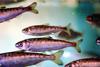
Tires’ silent killer: The toxic dust that kills salmon
Each year, Europe’s roads produce approximately half a billion kilograms of ‘tyre wear dust’, releasing a large amount of 6PPD-Q into the environment. This substance, a by-product of a common tyre additive, has been found to be lethal to coho salmon. A case is underway in the US to enforce a ban, with the Dutch RIVM and the Austrian UBA working towards a ban in the EU.
-
 International
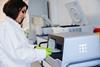
Gentle transfection
Introducing large molecules into a cell can be done using brute force, but this often causes damage to the cell. The Ghent-based start-up Trince focuses on photoporation, a unique transfection method that not only leaves cells in good health but is also suitable for high-throughput applications.
-
 International
Safety
The safety culture in academic laboratories differs greatly from that in industry. Sjoerd Rijpkema, former safety steward and Meme & Molecule columnist, identifies a fundamental problem.