



Working through the weekend seems to be treated as a badge of honour in academia. Isabelle Kohler argues that protecting your weekends is not a sign of weakness or lack of ambition – it is one of the most important decisions you can make for your long-term career and well-being. Rest is not the opposite of success: it is the condition for it.
We’ve officially entered my favourite time of year in the Netherlands: the parks are in bloom, the days are getting longer, and the density of holidays is at its peak. One of the perks of working in academia is that we get even more of these than the general population.
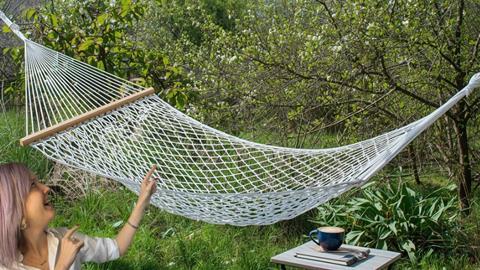
For me, that means more time for friends, nature, books, and daydreaming in my hammock – if the weather allows. But it wasn’t always like this. In my first years as an Assistant Professor, the workload was so overwhelming that I found myself working most weekends. I remember spending Sundays at the office preparing lecture slides, and Saturday mornings going through emails and student reports. That slowly pushed me toward a burnout and eventually led me to seek help from the company doctor. One of the first things I focused on was reclaiming my weekends – or at least parts of them.
Nowadays, I close my laptop on Friday evening and barely touch it until Monday morning. When I do open it, it is usually for NextMinds, my company – rarely for my academic job. I protect my weekends because I’ve seen firsthand the difference it makes on my mental health, my motivation, and my overall well-being. When I share this with PhD students, the reaction is usually the same: ‘this is unbelievable – my PI works every weekend.’ I know I’m clearly an exception.
‘Protect your weekends’ is not a popular opinion in academia, where success often seems to be measured in hours worked. Some people genuinely thrive on constant work and get real energy from it. But many of the PhD students and postdocs I encounter tell me that a healthy work-life balance is the main reason they don’t see themselves staying in academia long-term. Times have changed – younger generations put more weight on well-being, family, and rest. Yet overwork remains the norm and, in many places, it’s still being celebrated.
So where do you start if you want to protect your weekends?
-
Start small. If you’re currently working 24/7, cutting out weekends entirely will feel too big a leap. Begin with a two-hour slot – something you enjoy, with no work involved. Once that becomes a habit, build from there.
-
Remove notifications. Turn off email alerts on your phone and resist opening your inbox. If something is truly urgent, people will find you. Most things can wait until Monday.
-
Plan something to look forward to. Sport, a walk in nature, time with friends, or simply doing nothing – whatever gives you energy. It’s much easier to close the laptop when something better is waiting.
-
Communicate your boundaries. Let colleagues and supervisors know when you’re available and when you’re not. You don’t need to justify yourself – a simple ’I don’t respond to messages in the weekend’ is enough.
-
Let go of perfection. Academia comes with an endless list of tasks. No one will cut that list for you, and no one will say no on your behalf. If you want to protect your time, you’ll have to make that call yourself. ‘Done and good’ beats ‘perfect but unfinished’.
A PhD – or any position in academia – is a marathon, not a sprint. And you cannot run a marathon at full sprint pace from the very first kilometer. Protecting your weekends is not a sign of laziness or a lack of ambition. It is how you stay in the race long enough to actually finish it – and enjoy the journey along the way. And right now, with the parks in bloom and the days stretching longer, there’s a lot to enjoy.
If you are interested in learning more about how to navigate academia and protect your free time, do not hesitate to join the NextMinds Community! For this, you have plenty of choices: visit NextMinds website to learn more about my work, sign up for the newsletter, and follow me and NextMinds on LinkedIn.












Nog geen opmerkingen