
Features – Pagina 5
-
 International
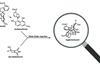
Intermolecular Diels-Alder is last step in super complex natural product
A close collaboration between teams from the universities of Leiden and Groningen succeeded in the total synthesis of the very complex molecule lugdunomycin and clarified its biosynthetic pathway, which included an intermolecular Diels-Alder reaction.
-
 International
Is there a real-world gap in PhD training?
Isabelle Kohler highlights the disconnect between academic training and real-world readiness. She calls for a systemic shift to better equip early-career scientists for a job market that extends far beyond academia.
-
 International
ChatGPT
After a reviewer carelessly left a ‘please let me know if you’d like some other questions!’, Sjoerd Rijpkema knew they had used ChatGPT for the reviewing process.
-
 International
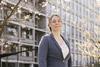
Awareness dawned in Botswana
Scientist Marthe Wens (32) is active in Scientist Rebellion. She learned to protest step by step. ‘At first, I watched from the sidelines until I was ready to take action myself.’
-
 International
Women in science: still invisible, even in space
Isabelle Kohler reflects on the recent all-female space flight and the media’s focus on celebrities over scientists. She shares actionable steps researchers can take to foster a more inclusive and equitable academic culture.
-
 International
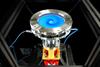
Une nouvelle approche de la photocatalyse
Les réactions photocatalytiques sont un sujet d’actualité, mais passer de l’échelle du laboratoire à l’échelle industrielle reste un défi. Le consortium PhotoScale concevra un photoréacteur à disque rotatif qui permettra de réaliser des réactions photocatalytiques intéressantes sur le plan pharmaceutique à une échelle relativement grande.
-
 International
Machine Learning pour la chromatographie
Ceux qui développent des méthodes de séparations chromatographiques le savent bien : séparer des mélanges (complexes) demande beaucoup de travail. Mais avec la naissance de du machine learning, un groupe de l’Université de Louvain parvient à accélérer efficacement le processus. Les personnes sont souvent bloquées par leurs propres méthodes.
-
 International
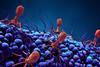
Nouvelle arme contre la résistance bactérienne : un ennemi des bactéries devient un allié
Obulytix, une spin-off de l’UGent et de la KU Leuven, voit dans les protéines issues des bactériophages un moyen de résoudre le problème croissant de la résistance aux antibiotiques. « Cela nous permettrait de créer un antibiotique optimal contre toute infection bactérienne possible. »
-
 International
Plastique recyclé vs plastique neuf : comment changer la norme ?
Pour véritablement progresser dans la lutte contre la pollution causée par les matières plastiques, le recyclage doit se réinventer.
-
 International
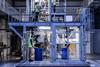
Biocon révolutionne la biomasse
En décembre 2023, le Sustainable Catalysis and Engineering (CSCE) de la KU Leuven a inauguré une nouvelle installation pilote pour la transformation des résidus de bois en matières premières pour l’industrie chimique. La scale-up Biocon utilise un nouveau processus catalytique pour ces transformations.
-
 International
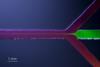
La puissance de la microfluidique sous trois formes
Cristallisation, émulsification et pervaporation. Mais cette fois, en s’appuyant sur la microfluidique. Ces trois technologies ont été réunies au sein d’une seule et même entreprise spin-off, Secoya Technologies, issue de l’Université libre de Bruxelles.
-
 International
Base de données Diels-Alder pour l’ordinateur et l’expérience
Des scientifiques de la Vrije Universiteit Brussel ont créé une base de données pour les chimistes travaillant sur les réactions de Diels-Alder, en particulier dans l’optique des réseaux adaptatifs covalents, selon “Macromolecules”.
-
 International
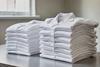
The lab coat: essential for working safely
Along with safety goggles and gloves, a lab coat is part of a lab technician’s standard equipment. And with good reason, because a good lab coat is essential for working safely. But not all lab coats are created equal. Here are some tips to help you choose the right lab ...
-
 International
University of Twente
The Dutch government is drastically cutting the budgets for scientific research and education and, at the same time, plans to lure US-scientists to The Netherlands. Sjoerd Rijpkema struggles to make sense of it all.
-
 International
Have a break, have a breakthrough
In the relentless world of academia, taking intentional breaks is often dismissed as an indulgence rather than a necessity. Isabelle Kohler shares the lessons learned during her recent “company retreat” in Lisbon.
-
 International
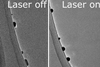
SHINE takes in operando measurements to the next level
Everything, all at once - that would be a suitable tagline for SHINE, the brand-new TEM facility at AMOLF in Amsterdam. ‘Now we can study real-world materials in real-world conditions, both in space and time.’
-
 International
Safety goes beyond gloves
Health and safety in the laboratory is an issue that most researchers give too little thought to, according to occupational hygienist Arco Engelen. During the LabSafety event on 20 May, he will not only point out the elephant in the room, but also provide tools for dealing with health and ...
-
 International
The struggle of timely PhD completion
Isabelle Kohler explores the structural issues behind PhD delays and shares practical advice for both PhD students and supervisors to support timely and sustainable PhD completion
-
 International
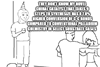
Palladium
Most scientific research will not win a Nobel Prize, writes columnist Sjoerd Rijpkema. Are we too attached to our boundaries?
-
 International
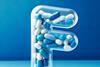
Putting the F in pharma
Adding fluorine to drug molecules can be tricky, but is often worthwhile. Rachel Brazil talks to the chemists trying to tame the ninth element.