
News – Pagina 14
-
 International
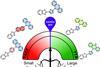
Phosphorescence at room temperature ‘solved’
If you want to generate phosphorescence of organic molecules in solution, very precise tuning of the energy levels of the excited states of your molecule is required.
-
 International
‘Dream scenario’ expands Synaffix’ scope
Being acquired by Lonza creates more room for Synaffix to develop bioconjugation in new directions
-
 International
Vidi grants 2023: RNA interactions, noise regulation and catalytic gold atoms
Dutch research funding organisation NWO rewards 97 researchers with a Vidi grant, which also means a boost for the molecular research field.
-
 International
Tagworks Pharmaceuticals raises €60 million to proceed towards clinical trials
Click-to-Release technology can increase the clinical applicability of antibody drug conjugates (ADCs).
-
 International
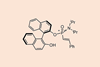
Phosphorus simply goes chiral
Ben Feringa’s group has found a simple and versatile way to make molecules in which the chiral centre sits on the phosphorus atom.
-
 International
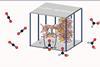
Caged enzyme reduces CO2
If you confine the enzyme FDH in a metal-organic framework (MOF) with magnetite, it is stable enough to be recycled after it has reduced CO2.
-
 International
Simple cross-coupling method with countless flavours
A general protocol for cross-coupling reactions can be made using nickel salt and visible light, according to a paper in Nature.
-
 International
Antidepressant effects without the ‘bad trip’
Hallucinogenic side effects of therapeutically interesting synthetic and natural psychedelics could be avoided.
-
 International
Deploying paradoxical activity of IL-4 via fusion protein technology and nanopackaging
A team of Dutch scientists explains how they succeeded in targeting interleukin-4 to immune cells in the spleen and bone marrow.
-
 International
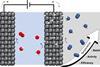
NH3 catalysis likes it hot
Raising the temperature of electrocatalytic NH3 synthesis with H-permeable Ni electrodes makes production higher, more stable and more efficient.
-
 International
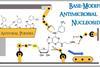
Nucleosides go (anti-)viral
Attaching antiviral purines to a ribose gives it both antiviral and antimicrobial properties.
-
 International
Amide catalyses chlorine production
In Nature, Chinese researchers propose organocatalysis as a way to make the old but still vital chlor-alkali process more efficient.
-
 International
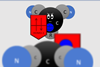
Radical shielding weakens C–C bond
Simulations confirm that the use of electron withdrawing groups on radicals weakens the resulting C–C bond.
-
 International
Stiff, light and flexible
Rigid materials cannot absorb shocks and cushioning materials are soft. Or are they?
-
 International
CO2 captured in Li battery electrolyte
The polymer of thiocarbonate monomers made with CO2 turns out to be very suitable as a solid-state electrolyte in lithium batteries
-
 International
Microporous water helps reduce oxygen
When amphiphilic zeolites are used in water, the oxygen reduction reaction goes so well that the platinum catalyst is partly the limiting factor.
-
 International
Mushroom poison has infrared solution
The known contrast agent indocyanine green can be used as an antidote to the world’s deadliest mushroom.
-
 International
Temperature-sensitive microcapsules bring DNA-based archive within reach
A new technique to access and read DNA files in parallel is another step towards using this biological data storage device.
-
 International
OPCW opens new chemical research laboratory
On 12 May, the new chemical technology laboratory of the OPCW, the ChemTech Centre, was officially inaugurated by King Willem-Alexander.
-
 International
Bacteria can also make good use of radioactive elements
Non-natural radioactive elements are not a problem for some bacteria.