
News – Pagina 13
-
 International
Darwin in a flask
Researchers from the University of Groningen present a system of two self-replicating ring structures capable of Darwinian evolution.
-
 International
Bisphenol alternative from the woods
Researchers from Leuven are using building blocks from wood oil to make more sustainable alternatives to harmful plastic bisphenol A.
-
 International
Map links odour to chemical structure
A newly developed neural network links the chemical structure of substances to their smell.
-
 International
‘An enriching week’: ChemistryViews on IUPAC | CHAINS 2023
ChemistryViews’ editor Vera Koester shares her impressions of a chemistry-filled week in The Hague.
-
 International
Antwerp to host EuChemS Chemistry Congress 2026
The 2026 edition of the biennial EuChemS conference will be organized by the Royal Flemish Chemical Society (KVCV).
-
 International
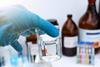
Poisoning to promote catalytic efficiency
Selective poisoning of the cathode catalyst surface with CO increases the efficiency of NO reduction to NH3 in polymer electrolyte membrane cells.
-
 International
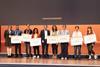
Poster prize winners at IUPAC | CHAINS 2023
Who presented the best poster at IUPAC | CHAINS 2023? It was up to the audience to decide.
-
 International
The future of scientific publishing and AI
With the rise of text-based AI technologies, the challenges of writing, reviewing and publishing scientific papers have also increased.
-
 International
Veni 2022 awarded
De Veni-ronde 2022 zijn toegekend. 188 wetenschappers hebben maximaal €280.000 ontvangen om de komende drie jaar hun projecten op te starten.
-
 International
Painkillers against oil
If you want to produce paracetamol (acetaminophen) or ibuprofen in a sustainable way, use β-pinene from biowaste streams as a starting point.
-
 International
A plane crash a hundred years in the making
Covid regulations proved fatal for a 1918 biplane. They greatly accelerated inevitable chemical reactions between the skin and the paint.
-
 International
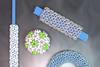
Folding virus coats
DNA origami can be used to create basic shapes that can subsequently be covered with viral coat proteins.
-
 International
Catalyst in a flexible shell
Researchers at the University of Amsterdam protect their hydrogen-releasing cobalt catalyst with porous spheres made from shrimp waste.
-
 International
Bioprinting with placenta-derived material
An international project will use human biological material as ink for 3D bioprinting.
-
 International
Ruthenium with your coffee?
Researchers at the University of Liège have succeeded in producing bio-based ruthenium catalysts from caffeine and theophylline.
-
 International
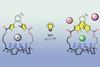
Photoswitch selects on size
By building an anion receptor with a gap that can be widened or narrowed by shining light on it, you can specifically control which anion binds.
-
 International
Passivation layer ligand improves stability of perovskite solar cells
A much longer lifetime is crucial to realising the promise of perovskite solar cells. A targeted choice of coating can increase its stability.
-
 International
Cyclic peptide binds top-priority pathogen
In Bioconjugate Chemistry, Brussels-based researchers describe synthetic, nanobody-derived peptides that bind a top-priority pathogen.
-
 International
Perovskite-silicon tandem solar cells push through efficiency barrier
A new generation of perovskite-silicon tandem solar cells can break the theoretical 30% efficiency barrier, Science reports.
-
 International
Ice-binding proteins do the twist
A de novo designed protein with a slightly imperfect helix is able to keep ice crystals in check, Wageningen and Eindhoven researchers report in PNAS.