


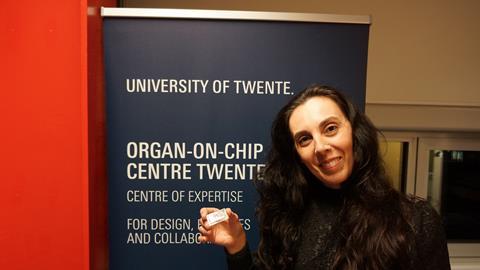
Our members form the beating heart of our societies. Here, we regularly highlight one of them. This time, it’s NVBMB-member Liliana Moreira Teixeira Leijten.
What do you do with chemistry?
‘Chemistry permeates all aspects of my work, both in the design of interfacing biomaterials and in the identification of molecular biomarkers. I use it to engineer hydrogels, surface chemistries, and signaling cues that regulate cell behaviour, as well as to define chemical readouts of tissue function and disease. Integrated with micro-engineering and biology, this enables organ-on-chip models for mechanistic and predictive studies of human disease and drug response.’
What motivated you to pursue your PhD in the Netherlands?
‘I was motivated by the Netherlands’ strong international reputation in tissue engineering and biomaterials. Dutch research groups in these fields are widely recognized as world leaders, particularly for their interdisciplinary approach and close links between chemistry, materials science, and biomedical engineering. This environment provided an ideal setting to pursue my PhD, build a strong collaborative network across disciplines, and contribute to research with clear clinical and societal relevance.’
What was the biggest cultural adjustment you had to make after moving to the Netherlands?
‘The most significant adjustment was the very direct communication style. Initially, it felt quite different from what I was used to, especially coming from more hierarchical academic environments. Over time, I learned to appreciate how this openness supports clear expectations, flat hierarchies, and constructive dialogue, all of which contribute to a positive and effective academic culture.’
What are you most looking forward to in the coming years?
‘I am excited to further develop organ-on-chip technologies with a strong focus on sex-specific and personalized medicine, to better understand how biological sex shapes cellular responses to defined microenvironments and chemical cues. I most often apply these concepts to musculoskeletal organ-on-chip models, such as osteoarthritis and osteoporosis, as these diseases show pronounced sex differences that remain largely unexplained, making them powerful systems for discovery.’
Why do you think it is important to be a member of the NVBMB?
‘As a researcher working at the interface of chemistry, biomaterials, and human disease modelling, the NVBMB offers an essential platform to connect molecular science with biomedical impact. It enables me to stay closely engaged with emerging chemical breakthroughs, from sensing to therapeutic strategies, while contributing to education, interdisciplinary dialogue, and the next generation of scientists. These networks are vital for fostering innovation, translation, and responsible alternatives to animal testing.’
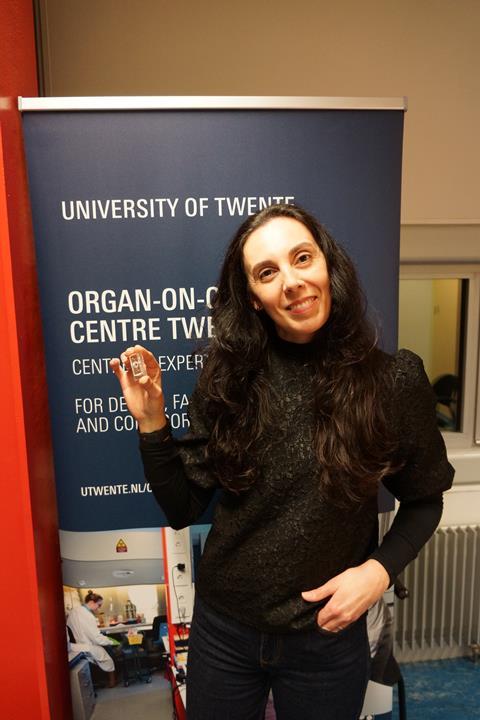
What does surroundings in the photo mean to you?
‘The organ-on-chip platforms represent the core of my scientific vision: combining chemistry, biology, and engineering to build human-relevant models of health and disease. The background setting, the Organ-on-Chip Center Twente at the University of Twente, symbolizes collaboration, innovation, and a shared commitment to replacing animal testing with predictive, human-based technologies that can truly impact patients.’
Liliana Moreira Teixeira is Associate Professor at the faculty of Science and Technology of the University of Twente (UT).







Nog geen opmerkingen