


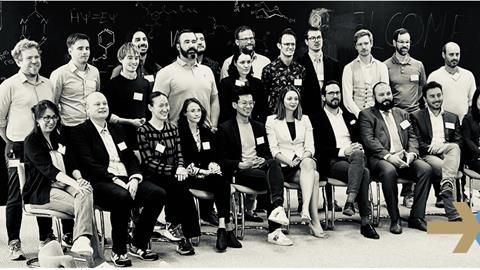

Last summer, the inaugural Next Generation Leaders in Dutch Chemistry Summit was held at the Lorentz Centre in Leiden. During the five-day event, a group of early-career chemists (NXTGN25) from academia and industry collaborated to develop a shared vision for the future of chemistry in the Netherlands. This resulted in a joint paper, of which we highlight three points here.
1. Reorient universities: people instead of metrics
NXTGN25 proposes that universities refocus on their core tasks of education (talent development) and research (knowledge development). This requires a drastic reduction in bureaucracy and administrative pressure on scientists, and a shift away from the focus on performance indicators. Universities must once again recognise researchers as the driving force behind the institution rather than viewing them as output machines. Investments should primarily benefit the creation of time and space for research, fundamental science, and the mentoring and guidance of students rather than disappearing into management layers and overheads. NXTGN25 also advocates greater trust in scientific integrity on the part of management and society. An open, inclusive, critical and curiosity-driven academic culture is essential to guarantee innovation, quality and social relevance.
2. Ensure that talent feels at home and can flourish
NXTGN25 argues that young researchers (especially international ones) should be welcomed as well as recruited. This involves providing practical assistance with language learning, housing and navigating the Netherlands, as well as fostering social connections and mentorship. Universities and companies should value teamwork more, rather than only rewarding and considering individual performance. Leadership should be about listening, connecting and sharing responsibility, not power or hierarchy. NXTGN25 strives for safe, inclusive workplaces where people feel empowered to speak out and are encouraged to learn from their mistakes. By organising structured mentoring and ensuring equal opportunities, a community can be created in which talent can flourish and settle permanently, which is essential for the future of Dutch chemistry in the broadest sense.
3. Make chemistry visible, understandable and socially relevant
NXTGN25 aims to make chemistry more accessible to society by collaborating and communicating clearly. Rather than operating in their own separate worlds, scientists, businesses and government must work together on major issues such as energy, health and circularity. At the same time, NXTGN25 aims to demonstrate more clearly how chemistry affects everyday life. For example, accessible platforms such as KNCV Eye-openers could be used, as well as stories from young researchers in podcasts and the media. This makes science more relatable and human.
Next Generation Leaders in Dutch Chemistry (NXTGN) is a KNCV initiative. The programme focuses on early-career researchers in academia and industry who excel in science and want to contribute to leadership, collaboration and social impact within the Dutch chemistry sector. NXTGN is building a national network of future leaders who reflect together on the strategic role of chemistry in addressing challenges such as sustainability, energy and health.
Read the white paper here.











Nog geen opmerkingen