


According to the Scientific Reports journal, the authors of a 2024 publication did not provide sufficient evidence of pollution caused by lithium exploration activities in the Jadar region of Serbia, and therefore the study has been retracted. However, some argue that the retraction comes too late, given that Rio Tinto has already put the mining project on hold. ‘The damage has been done.’
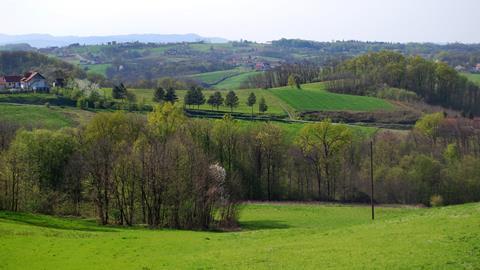
There has rarely been so much controversy surrounding a mining project. For years, the Australian-British mining company Rio Tinto’s plans to mine lithium in western Serbia have been met with protests. Opponents claim that mining would cause significant environmental damage to the Jadar region.
In 2024, the scientific community provided them with new evidence to support their claims.
That summer, Scientific Reports, a journal published by Nature, released a study revealing elevated concentrations of arsenic, boron, and lithium in several Jadar rivers. This pollution was said to have come from Rio Tinto’s exploration activities and suggested that environmental damage had already been done even before any lithium mining had taken place. This, of course, contradicted the mining company’s and the project’s supporters’ claims that future mining would be carried out in a highly responsible manner.
Questionable methodology
However, the publication was soon criticised. Other scientists took issue with the data used and the methodology employed, arguing that the dataset was too limited and the methodology questionable. For example, the authors did not take baseline measurements of the substances in question in the river water. Furthermore, the data contained no trace of an incident in 2014, when waste from a closed neighbouring antimony mine spread during a flood.
In October 2024, remarkably, the authors published a correction to their article in Scientific Reports. However, they did not address the important criticisms, such as those mentioned above; they merely corrected a few errors.
The criticism did not subside. At the beginning of this year, Scientific Reports decided to retract the paper. The journal justified this by stating that there was insufficient evidence of environmental pollution caused by exploration activities.
Factual inaccuracies
Peter Tom Jones, head of the Institute for Sustainable Metals and Minerals (SIM²) at KU Leuven and a fervent advocate of responsible mining in Europe, welcomes the retraction: ‘Not only are the data and methodology flawed, but there are also factual inaccuracies in the paper. The processing of jadarite [the lithium-containing mineral present in Jadar, ed.] is confused with that of spodumene [another lithium-containing mineral, ed.]. It is also claimed that mine waste would be stored in wet conditions, whereas it would actually be stored in dry conditions.’
Jones, who released a controversial documentary about the mining project a year ago, also questions the expertise of the paper’s authors, most of whom have a background in environmental sciences. ‘There are no geologists or metallurgists among them, which is strange for an article that makes strong claims about the consequences of exploration, extraction, and processing activities. It’s comparable to a paper on a new treatment for brain cancer that doesn’t have a single oncologist among its authors.’
However, he believes that the retraction comes too late. Due to ongoing, highly politicised protests in Serbia, Rio Tinto decided at the end of last year to put the project on hold. ‘The damage has been done; the opponents have won. And this harmful article certainly played a role in that.’






Nog geen opmerkingen