


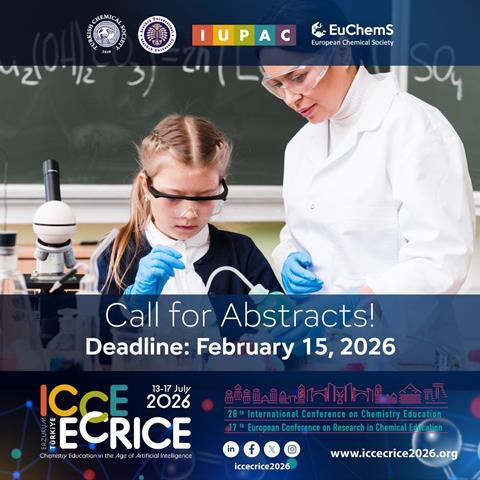
From evidence-informed assessment to ethical AI use: the joint ICCECRICE conference opens its doors to anyone interested in the future of chemistry education. With the explosive growth of AI applications, it is time for a robust exchange between practice and science. Stefania Grecea, Associate Professor at University of Amsterdam and member of the international advisory board, takes us through some highlights.
What is the ICCECRICE conference all about?
‘It is a joint conference between the International Conference on Chemical Education (ICCE) and its European equivalent, the European Conference on Research in Chemical Education (ECRICE). There have been so many technical developments, particularly in the field of AI, that they cannot be ignored in chemistry education. That’s what the focus will be. The conference aims to provide a platform for chemistry education practitioners and researchers to exchange ideas, with the goal of connecting chemistry educators in both secondary and tertiary education with chemistry education researchers.’
What kind of topics can we expect?
‘The main programme covers more traditional themes, but as part of the scientific advisory board, we proposed to include workshops and symposia addressing emerging topics which are open to anyone interested in chemistry education. This resulted in a broad array of topics that still align with the conference themes. For example, I’m organising a symposium on evidence-informed assessment for generative AI with two colleagues from the IUPAC committee in chemistry education. We are still looking for educators and researchers who would like to contribute a presentation to the symposium.
Other topics include the ethical and responsible use of AI in chemistry education, good practice of effective integration of AI, digitalisation and assessment. You can still submit proposals for these topics. In addition to the workshops and symposia, our goal is to have speakers and organisers facilitate discussions about evidence-based strategies to support the teaching and learning of chemistry at both secondary and tertiary level. This is even more important for secondary level, given the shortage of science educators in this area.
What are you most excited about in relation to the conference?
‘This is the first time I have joined such a large event focused on chemistry education. I’m not aware of another event that has created such a great opportunity to bring together practitioners and researchers in chemistry education. That is really unique.’
If you would like to contribute, the deadline for submitting abstracts for symposia talks is 1 February. You can find more information on the ICCECRICE website.







Nog geen opmerkingen