



Research that is both innovative and fundamental, and which is of a high quality and/or scientific urgency. This is the goal of the 21 successfully funded projects. Some of the projects also involve members of our associations.
The M grant enables researchers to develop creative and risky ideas, bringing about scientific innovations that could shape future research themes. In this M round (package 24-3), a total of 82 applications were processed, of which 59 were M-1 applications and 23 were M-2 applications. The ENW board has decided to award funding to five M-2 applications and sixteen M-1 applications.
Unmasking a stealthy enemy: cryo-EM revealing Legionella’s invasion tactics
Alexander Belyy (RUG, NVBMB member)
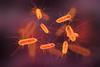
Hiding in the water systems we use every day, the pathogenic Legionella pneumophila bacterium waits for the right moment to apply its sophisticated strategies to hijack our lung cells and cause life-threatening pneumonia. Our project employs advanced cryo-electron microscopy (cryo-EM) to reveal these elusive tactics at the molecular level. With unprecedented resolution, we will visualize bacterial attacks, allowing us to gain critical insight into the methods of infection. This study promises to redefine our understanding of L. pneumophila pathogenicity and paves the way for the development of novel medical interventions to combat Legionnaires’ disease.
Unravelling novel principles of archaeal chromatin organisation
Remus Dame (LEI, KNCV and NVBMB member) & Gijs Wuite (VU)
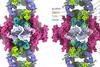
The genomes of all forms of life are structurally and functionally organised to orchestrate the DNA-encoded key functions in the cells of these organisms, such as transcription of genes. Histones and histone-like proteins are central players in genome organisation. Canonical histones organise genomic DNA by wrapping DNA around a protein core. Here, we investigate the possibility that a class of non-canonical histones that we identified bioinformatically functions in a completely different, unconventional, manner. The knowledge generated in this project is key to advancing our understanding of the structural principles that underly genome organisation and of genome evolution.
Precision Chemistry in Tiny Spaces: Unlocking Catalyst Design for Zero-Carbon Waste
Evgeny Pidko (TUD, KNCV member) & Nikolay Kosinov (TU/e)
This proposal aims to revolutionize catalyst design by achieving zero-carbon waste through precise selectivity control in confined catalytic systems. Using zeolite-catalyzed biomass conversion as a model, we explore how spatial confinement and entropy interplay to direct reaction pathways. By integrating advanced computational modeling with operando spectrokinetic experiments, we will map reaction networks, identify key intermediates, and optimize conditions to suppress wasteful by-products. This research shifts the paradigm of catalyst design, focusing on controlling selectivity with molecular precision.
Curing with light and listening to its treatment effects
Wiktor Szymanski (RUG, KNCV member) & Schelto Kruijff (UMCG)
Photopharmacology enables precise pharmacotherapy in time and space by designing drugs whose activity can be controlled with light. However, without the support of modern medical imaging methods to reveal the location of the disease and the therapy activation, photopharmacology remains blind. In this project, we will for the first time synergize photopharmacology with optoacoustic imaging to create a theranostic treatment modality that allows for on-the-fly monitoring of drug activation and its outcomes. We will realize this evaluate this concept in the context of papillary thyroid carcinoma (PTC) treatment, where it can substitute aggressive surgical therapy that results in serious morbidity.
See all projects here.






Nog geen opmerkingen