
News – Pagina 7
-
 International
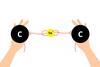
One-electron covalent bond between two carbons pushes limits of bonding
Scientists in Japan have made a groundbreaking discovery: they have identified a covalent bond between two carbon atoms that share only a single electron.
-
 International
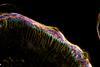
€5 million for better imaging
Amsterdam-based Confocal.nl has received a €5 million investment to make its live cell imaging more accessible. As a foretaste of what is possible, they have produced this stunning image of a mouse ear.
-
 International
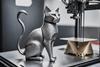
3D printed sustainable cat
A team from Amsterdam has 3D printed a catalyst made entirely of stainless steel and aluminium that works extremely well for borohydride hydrolysis.
-
 International
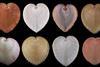
Biophotonic ‘windows’ enable symbiosis
Several molluscs have developed benificial relationships with symbiotic, photosynthetic algae. Heart cockles boast advanced biophotonic structures in their shells that operate like optic fiber cables to catch and transmit the incoming sunlight.
-
 International
Making square drug fragments under pressure
1,2-substituted cyclobutanes can be easily prepared under high pressure and are interesting building blocks for drug development.
-
 International
Biocompatible labelling for PET scans
A Franco-Belgian team has developed a gallium-18F complex for PET scans that can also be attached to biomolecules. It could be turned into an 18F radiolabelling kit.
-
 International
Pure iron carbide phase nurtures alpha-olefins
Careful pretreatment of your iron catalyst enables the highly efficient production of chemical building blocks in a Fischer-Tropsch reactor, an Eindhoven-Beijing team reports in Nature (after a 5-year reviewing period).
-
 International
Biosurfactant synthesis in deep eutectic solvents
Natural deep eutectic solvents can be used to produce an interesting biosurfactant in a more sustainable way without organic solvents, Antwerp researchers write in the European Journal of Organic Chemistry.
-
 International
Biochemical alchemy, greasy proteins and quantum molecules: Vidi grants have been announced
A variety of molecular science project can take off thanks to an NWO Vidi grant. Ranging from CO2 fixation and supramolecular materials capable of learning to AI and sweet molecules.
-
 International
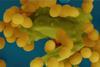
Clumping pests
A team from Umeå University in Sweden has been studying how bacteria pass on their resistance genes to each other, resulting in a beautiful picture.
-
 International
KNCV Gold Medal 2024 awarded to Caroline Paul
Jury praises her pioneering and creative research on biocatalysis, which opens new technological routes towards sustainable chemical production.
-
 International
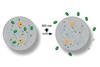
Artificial cell communication: protein on demand
Researchers in Eindhoven have developed an artificial cell system that mimics the mutual communication of biological cells.
-
 International
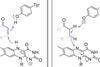
Reducing enzyme can also oxidise
NADPH dehydrogenase can not only reduce but also oxidise by simply raising the pH, as researchers from Delft show in ChemCatChem.
-
 International
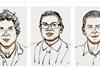
Nobel Prize in Chemistry goes to protein folding computer
Source: Niklas Elmehed © Nobel Prize Outreach Left to right: David Baker, Demis Hassabis and John Jumper The Nobel Prize in Chemistry goes to the prediction of protein structure and folding.
-
 International
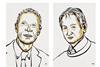
Nobel Prize in physics goes to machine learning
The Nobel Prize in Physics has been awarded for ‘fundamental discoveries and innovations that enable machine learning with artificial neural networks’.
-
 International
Nobel Prize in Physiology for microRNA discovery
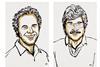
Victor Ambros and Gary Ruvkun are awarded the Nobel Prize in Physiology for their discovery of microRNA and its role in post-transcriptional gene regulation.
-
 International
Not all that glitters is gold
Researchers from the Rijksmuseum, the University of Amsterdam and the University of Antwerp, came across unusual arsenic sulfide pigments that Rembrandt, among others, used to create strikingly shiny details in his work.
-
 International
Programming molecular memory
Using a simple autocatalytic reaction, researchers have programmed a chemical reaction network that has memory and performs logical functions.
-
 International
(Not) sharing is caring
Using a combination of heat and light, symmetric σ-bonds can be broken asymmetrically, German researchers show in Nature.
-
 International
Zapping sand
Turning soft beaches into hard rock. American researchers managed this (at least on lab scale) by exposing sea-soaked sand to a mild electric current.