






TOC captures the full spectrum of organic carbon, including high molecular substances, poorly oxidizable compounds and suspended particles, and provides a more realistic representation of the organic load in wastewater. This value feeds into a calculated oxygen demand, which forms the basis of the Heffingen.
Wastewater taxes are now calculated from TOC and nitrogen:
- Zuurstofverbruik = Q × (3 × TOC + 4.57 × (TNb – TON)) / 1000
- 3 × TOC: The TOC value is converted into an oxygen equivalent using a fixed multiplication factor of 3.
- + 4.57 × (TNb – TON): The nitrogen related component is added.
As TOC yields the full real organic load, which COD sometimes underestimated, and nitrogen contributes additional to load, costs may increase significantly.
What companies should do to reduce their costs
Industries like food & beverage, paper, chemicals and pharmaceuticals and others typically exhibit organic peaks caused by cleaning cycles, batch changes, tank emptying or seasonal variations in raw materials. With TOC analysis, these peaks become more visible and are incorporated directly into the charge calculation. Companies can take steps to keep costs under control:
Although the Waterregeling sets no fixed measurement frequency, high frequency testing can detect peaks early and avoid costly extreme values. This enables plants to buffer, dilute, redirect, or reschedule discharges, optimize cleaning cycles, and respond more quickly to process disturbances.
Companies may apply for a more favorable factor in the deviation protocol if they can show their actual TOC/COD ratio is < 1:3. This requires reliable, extensive database with stable result: the better and denser the data, the higher the chance of reducing Heffingen.
All billing relevant analyses must follow NEN EN ISO 20236. Accredited laboratories, traceable measurement programs, and representative samples are mandatory, and clean documentation is essential for regulatory acceptance.
Practical solution
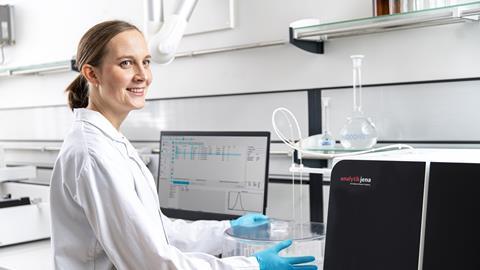
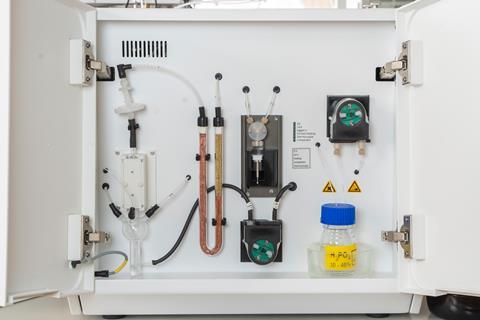
TOC is faster and more reproducible than COD and enables denser datasets. With a suitable sampling strategy, laboratory TOC can reveal peaks early. The multi N/C x300 series (e.g., multi N/C 2300 and multi N/C 3300) offers strong laboratory solutions. With excellent particle handling and oxidation temperatures up to 950 °C, the analyzers master challenging wastewater samples with ease. The devices are user-friendly, with an intuitive interface and clearly arranged, accessible consumables that are easily replaceable. The multi N/C x300 series provides precise, robust and standard compliant TOC analysis Dutch companies now need – to detect peaks, optimize their processes, and keep their taxes under control.
You can find more information here.