
International – Pagina 14
-
 International
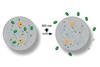
Artificial cell communication: protein on demand
Researchers in Eindhoven have developed an artificial cell system that mimics the mutual communication of biological cells.
-
 International
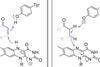
Reducing enzyme can also oxidise
NADPH dehydrogenase can not only reduce but also oxidise by simply raising the pH, as researchers from Delft show in ChemCatChem.
-
 International
Thriving in academia with a chronic condition
Isabelle Kohler shares her experience of navigating academia while managing health struggles, offering practical strategies for others to thrive too.
-
 International
Enzyme Superheroes
Ivana Drienovská specializes in designing enzymes for reactions that do not occur in nature.
-
 International
Harnessing AI for a greener future
Using AI, Nongnuch Artrith predicts which new materials have the most potential. This way, AI can help us create a greener future.
-
 International
Electricity from greenhouse gas eating bacteria
Cornelia Welte is working on a battery in which methane is converted into green energy through microbes.
-
 International
A customised cellular living environment
Maritza Rovers builds a microgel that supports damaged cells in our bodies.
-

-
 International
Building with (pruning) wood
Burning construction waste and wood is not efficient. Beyond Wood produces building materials from pruning waste that can be used more than once.
-
 International
Machine learning and computational hydrogenation: an experiment
Chemists from Delft published one of the largest datasets of a model of rhodium-catalysed hydrogenation that showed surprisingly little.
-
 International
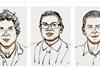
Nobel Prize in Chemistry goes to protein folding computer
Source: Niklas Elmehed © Nobel Prize Outreach Left to right: David Baker, Demis Hassabis and John Jumper The Nobel Prize in Chemistry goes to the prediction of protein structure and folding.
-
 International
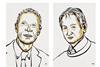
Nobel Prize in physics goes to machine learning
The Nobel Prize in Physics has been awarded for ‘fundamental discoveries and innovations that enable machine learning with artificial neural networks’.
-
 International
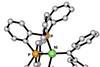
Understanding nickel complexes step by step
Using quantum chemical calculations, a Utrecht-Amsterdam team analyses the synthesis, reactivity and bond formation of nickel carbene complexes.
-
 International
Hot plasma is a more efficient NH3 cracker
Hot plasmas are better than cold plasmas for cracking ammonia for green hydrogen, Antwerp researchers discovered.
-
 International
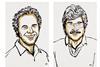
Nobel Prize in Physiology for microRNA discovery
Victor Ambros and Gary Ruvkun are awarded the Nobel Prize in Physiology for their discovery of microRNA and its role in post-transcriptional gene regulation.
-
 International
Not all that glitters is gold
Researchers from the Rijksmuseum, the University of Amsterdam and the University of Antwerp, came across unusual arsenic sulfide pigments that Rembrandt, among others, used to create strikingly shiny details in his work.
-
 International
An introvert’s guide to professional events
Isabelle Kohler offers practical tips to help introverts not onlly survive but even thrive at conferences and professional events.
-
 International
Programming molecular memory
Using a simple autocatalytic reaction, researchers have programmed a chemical reaction network that has memory and performs logical functions.
-
 International
(Not) sharing is caring
Using a combination of heat and light, symmetric σ-bonds can be broken asymmetrically, German researchers show in Nature.
-
 International
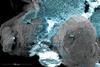
Zapping sand
Turning soft beaches into hard rock. American researchers managed this (at least on lab scale) by exposing sea-soaked sand to a mild electric current.