ScienceLink artikelen in C2W international, 2023
View all stories from this issue.
-
 International
Making lignin branches easier to visualise
Despite the fact that lignin has been analysed for quite some time, it is still a considerable challenge to map the branches properly.
-
 International
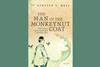
About peanuts and a double helix
The man in the monkeynut coat is a witty biography about a renowned scientist with a forgotten role in the history of DNA.
-
 International
Zeolite membrane sifts CO2 from gas mixtures
Leuven researchers combine polymers and zeolite in a membrane matrix for superefficient gas separation.
-
 International
Sam Stupp’s dancing molecules heal spinal cord injuries
Samuel Stupp designs and develops supramolecular polymers for various applications, ranging from clean energy technology to regenerative medicine.
-
 International
What does a brain ‘sound’ like?
We know ultrasounds as grainy grey pictures, but with the latest imaging techniques, they can look like this.
-
 International
Aerocount – Insight into air quality
Beate Stevens of Aerocount developed a way to measure the amount and type of particulate matter in the air.
-
 International
Mushroom synthesis unstable
For the first time, a number of substances from the mushroom family Ganoderma have been produced via total synthesis.
-
 International
Dissolving threads enable design-for-disassembly
Brussels-based Resortecs offers a new angle on textile recycling by offering heat-dissolvable threads that enably easy dissambly of clothing.
-
 International
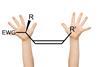
Synthesis brings alkenes zusammen
Groningen researchers have found an easier way to make alkenes where the functional groups are on the same side.
-
 International
Leon Smook – Can you smell without your nose?
Leon Smook is investigating the possibilities of an artificial nose, which can identify odors at a molecular level.
-
 International
Pregnant PhD students get automatic contract extension
PhD students and postdocs working in chemical laboratories at WUR will find it much easier to extend their contracts from this year onwards.
-
 International
Metamaterial computes more efficiently than electronics
AMOLF researchers describe their nanostructured metamaterials that can perform mathematical operations.
-
 International
‛The final industrial materials don’t have to be that precise’
If Filip Du Prez has his way, thermosets such as epoxies will be almost as recyclable as thermoplastics in a few years’ time.
-
 International
Annemarie Maan – Life without stickiness
How nice would it be if the cleaning of sewers became redundant? That is why Annemarie Maan is doing research into dirt-repellent layers.
-
 International
Bacteria digest plastic
Texel researchers demonstrate via carbon isotopes that the bacterium Rhodococcus ruber can eat polyethylene.
-
 International
Chemical tricks offer real-life sensations
Are you really cold or is it just caused by the menthol applied to your skin? A new system of chemical haptics is playing tricks on your body.
-
 International
Plants take up chemical weapons
If there has been an attack with chemical weapons somewhere, you should be able to see it in the leaves of plants.
-
 International
Tim den Hartog – Making chemical industry more sustainable with light
We can use light to make the chemical industry more sustainable. Unfortunately, implementation is lagging.
-
 International
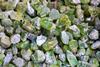
Searching for optimal conditions for silicate weathering
A European consortium is investigating whether it is possible to accelerate the weathering of silicate rocks in a reactor.
-
 International
4Tissue provides better breast reconstruction
A group of scientists in Ghent developed a new material for breast reconstruction and aims to bring their invention to patients.