
ScienceLink artikelen in C2W international, 2024 – Pagina 4
-
 International
First designer enzyme with boron chemistry
Researchers in Groningen have built a variant of boric acid into an enzyme, a first in the world of designer enzymes.
-
 International
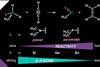
Hydrogenation with transition metal mimics
Silicon, germanium and tin versions of carbenes make good hydrogen activators for hydrogenation reactions, quantum calculations show.
-
 International
Improving sustainability starts in your own lab
In RSC Sustainability, Groningen researchers present the results of their efforts to make labs more sustainable and provide tips for other labs.
-
 International
New KNAW members 2024
The Royal Netherlands Academy of Arts and Sciences has added 17 new members, including three KNCV members.
-
 International
A well-rested mind as fertile ground
In this column, Isabelle Kohler encourages young scientists to set clear boundaries and prioritize their health.
-
 International
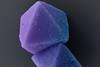
DNA diamonds
You can create extraordinary photonic crystals out of ‘tetrapods’ using DNA origami with unprecedented precision.
-
 International
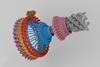
Protein gear gives flagella two rotation directions
Bacteria swim with flagella, and a clever switching system allows them to aim at a target. New research shows how the flagellar drive changes direction.
-
 International
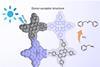
Metal-free MOF makes imines
Pyrene-based covalent organic frameworks and blue light can be used to make imines in an environmentally friendly way.
-
 International
Francqui Prize for Veronique Van Speybroeck
Veronique Van Speybroeck will be awarded the 2024 Francqui Prize for Exact Sciences for her pioneering computational work on catalysts.
-
 International
Fully recyclable silicone elastomers
Researchers from Ghent have developed a scalable method to make silicone elastomers fully recyclable.
-
 International
Quartz: invisible interface, incredibly important
With its high-quality quartz materials for cuvettes and laboratory probes, HELLMA Analytics enables researchers to perform extremely precise optical spectroscopy measurements.
-
 International
Making biosurfactants mainstream
Ghent-based start-up AmphiStar is one of the first in the world to produce biosurfactants using a yeast that derives its nutrients entirely from biological waste streams.
-
 International
‘If you want to apply a technology, you need to fully understand it’
Making molecules with bacteria and electrochemistry, that’s what drives Ludovic Jourdin in a nutshell. This relatively new field is developing quickly and has much to offer.
-
 International
Creating a healthier academic environment for all
Isabelle calls for a shift in the academic mindset and emphasizes the need for structural changes to ensure the well-being of academic professionals.
-
 International
Sustainable and healthy potato starch
Royal Avebe is collaborating with CarbExplore Research and the University Medical Centre Groningen (UMCG) to develop new healthy starch varieties.
-
 International
Size matters: how optical DOSY helps your chemical analysis
InspectT has developed a size-determining chip that can be easily integrated into an IR or UV/Vis spectrometer.
-
 International
Cheap and sustainable cross-coupling photocatalyst
Graphitic carbon nitride is able to replace iridium as a photocatalyst in cross coupling reactions, greatly reducing cost and carbon footprint.
-
 International
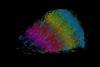
Hey Google, what does a brain look like?
A team from Google Research and Harvard University has published the largest ever dataset of neural connections in a fragment of the human brain.
-
 International
Polymer waste electrochemically recycled
Electrochemical recycling, made with AI Electrochemistry may be an underexplored option for recycling plastic waste, researchers show in a review in Chemical Science.
-
 International
Choosing the right PhD supervisors: a make-or-break decision
Isabelle Kohler gives you tips for choosing a PhD supervisor, emphasizing the importance of a good fit for a successful PhD and career.